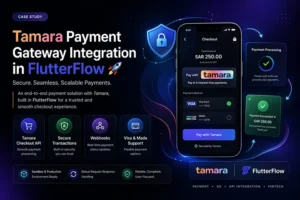
In today’s digital ecosystem, integrating a reliable payment gateway is essential for delivering a smooth and secure user experience. However, building a payment system isn’t just about processing transactions — it’s about ensuring security, reliability, and compliance, all while maintaining a seamless user journey.
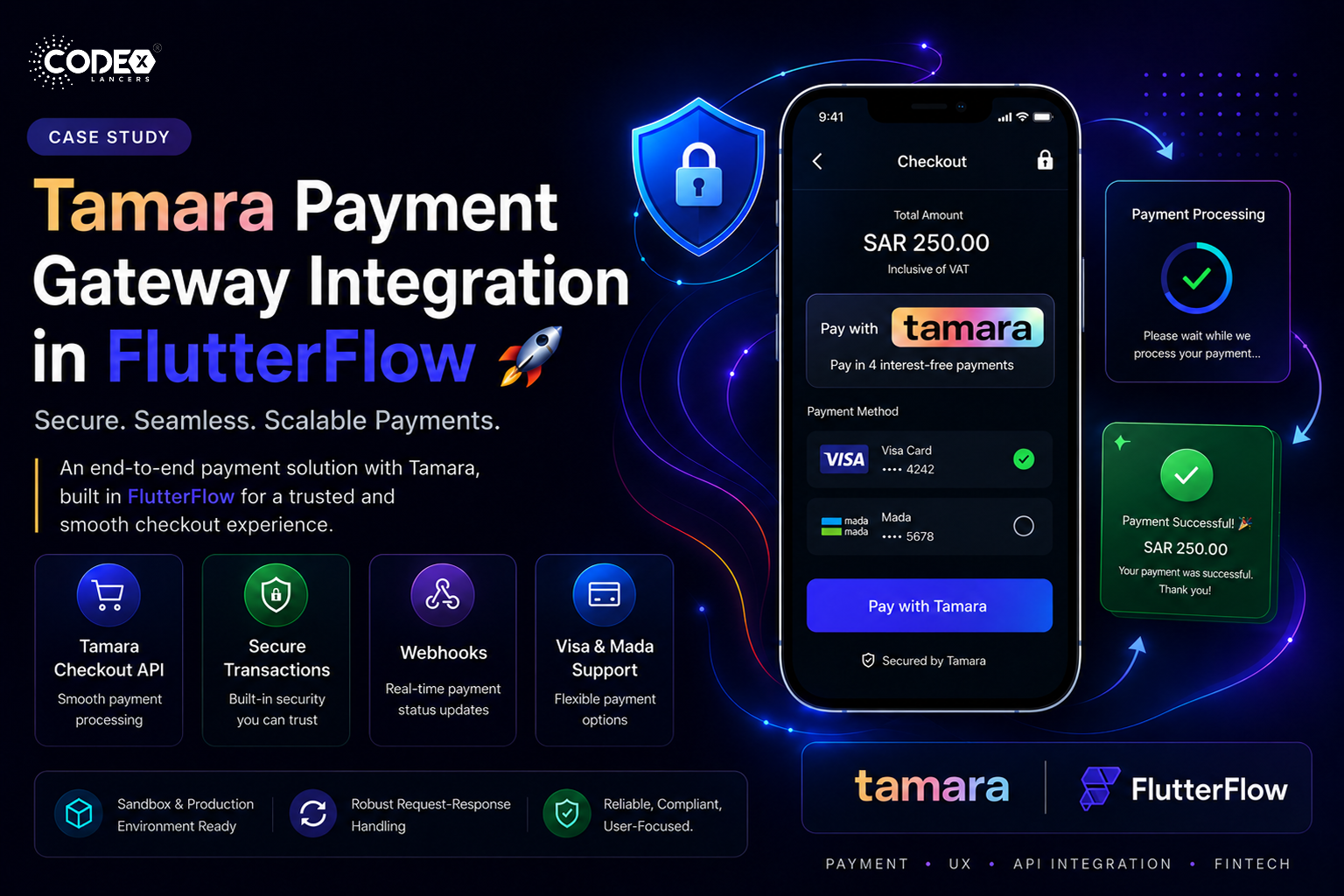
Recently, I worked on integrating the Tamara Payment Gateway into a FlutterFlow application, creating a complete end-to-end payment workflow — from initiating transactions to handling real-time updates.
The Goal
The objective was to implement a secure and scalable payment flow that:
- Enables users to complete payments smoothly
- Handles transaction states reliably
- Ensures compliance with Tamara’s payment standards
- Works seamlessly across development and production environments
The Implementation
The integration involved connecting Tamara’s APIs with the FlutterFlow application and managing the full payment lifecycle.
Key Features Implemented
Tamara Checkout API Integration
We used Tamara’s Checkout API to:
- Initiate payment sessions
- Redirect users to the hosted checkout page
- Process transactions securely
Secure Payment Handling
Security was a top priority. The implementation ensured:
- Proper API request validation
- Safe handling of transaction data
- Compliance with Tamara’s payment flow
Webhook Integration for Real-Time Updates
To keep track of payment status:
- Implemented webhooks to receive real-time updates
- Handled events such as:
- Payment success
- Payment failure
- Transaction updates
This ensures the app always reflects the correct payment status.
Payment Method Support
Enabled support for:
- Visa cards
- Mada cards
This ensures compatibility with regional payment preferences.
Environment Configuration
Set up both environments:
- Sandbox (Development) for testing
- Production for live transactions
This separation ensures safe development and smooth deployment.
Reliable Request & Response Handling
Carefully managed API communication to:
- Handle success and failure cases
- Prevent duplicate transactions
- Ensure consistency across the payment flow
Key Challenge: Hosted Checkout Limitations
One of the most interesting aspects of this integration was understanding the limitations of Tamara’s hosted checkout flow.
Unlike custom UI payment solutions:
- The payment interface is controlled by Tamara
- UI customization options are limited
Why This Matters
At first, this might seem like a limitation, but it actually ensures:
- Higher security standards
- Compliance with payment regulations
- Reduced risk of implementation errors
Understanding these constraints helped align the integration with best practices recommended by Tamara.
Final Result
The final implementation delivered:
- A stable and secure payment experience
- Smooth transaction processing
- Accurate real-time payment updates
- Full compliance with Tamara’s standards
Users can now complete payments confidently, knowing the system is both secure and reliable.
Key Learnings
Balancing UX and Security
Not all payment flows allow full UI control. Sometimes, prioritizing security and compliance is more important than customization.
Importance of Webhooks
Webhooks are critical for:
- Real-time updates
- Backend synchronization
- Reliable transaction tracking
Tech Stack
- FlutterFlow
- Dart
- Tamara Payment Gateway APIs
- Webhooks for real-time updates
Final Thoughts
This integration reinforced an important lesson:
A great payment system is not just about UX — it’s about trust, security, and reliability.
By combining FlutterFlow with Tamara’s infrastructure, we were able to build a solution that meets both user expectations and industry standards.
If you’re working on payment integrations, always remember:
- Understand platform limitations
- Follow recommended flows
- Prioritize security over customization
#FlutterFlow #PaymentGateway #Tamara #Fintech #MobileDevelopment #APIIntegration #Webhooks